
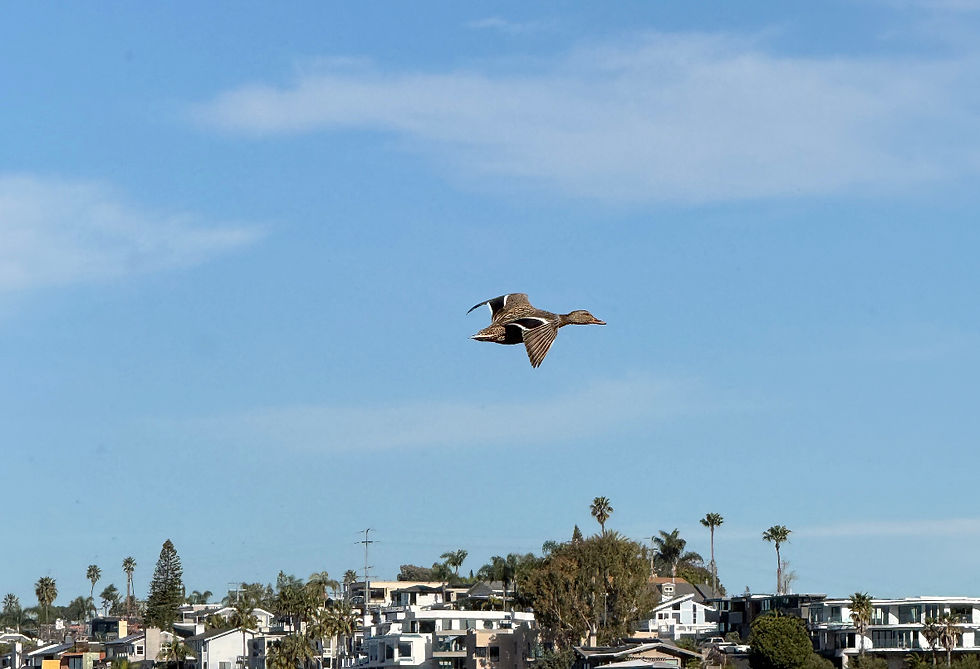
Mallard
Mallards are dabbling ducks that float on shallow waters and fish by submerging their head to snatch their prey. Microscopic hooks of one feather interlock with another to create a smooth barrier against water. This develops a waterproof property, assisting with the mallards’ predation, as remaining dry allows them to float. It additionally prevents the inner downy feathers from getting wet, keeping the ducks warm even in the chilly waters. Rather than relying on chemicals, innovators can mimic the interlocking mechanism to develop waterproof products, contributing to less toxicity and pollution.
The iridescent purple-blue stripes adorning the mallard’s wings are not from pigments; they are actually nanostructures that reflect light at different angles. This creates the shimmering brilliance that is most prominent during flight, helping the flock stick together during migrations. Biomimicry of the speculum feathers can be applied to materials that need coloring, thus developing more sustainable processes. For example, the fashion industry consumes exorbitant quantities of water, partially due to the dying process. Textiles with nanostructures that naturally produce colors will reduce the amount of water used.
Sources:
https://sdplantatlas.org/birdatlas/pdf/Mallard.pdf https://www.allaboutbirds.org/guide/Mallard/id
https://asknature.org/collection/feathers/
https://wingtrip.org/2015/02/25/a-natural-history-lexicon-speculum/
