top of page

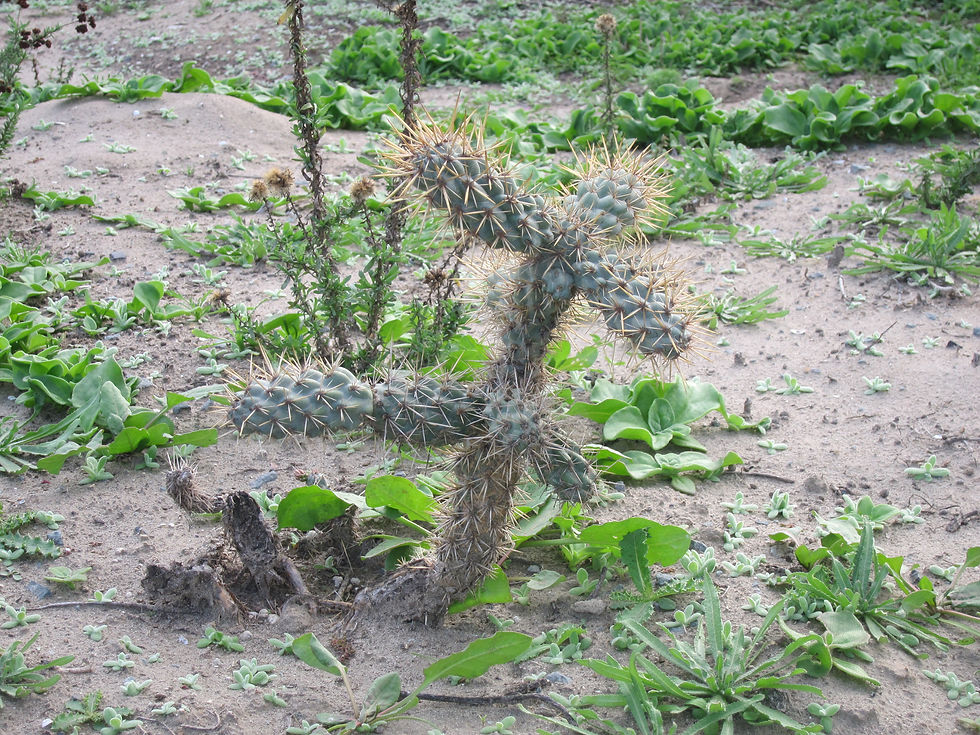
Cholla Cactus
Cholla cacti are prevalent in deserts and chaparrals; to thrive in such arid environments, they have developed various structural adaptations, such as the prominent bumps called tubercles. Those bumps expand to store water and contract during droughts, allowing for a dynamic response to significant environmental changes. Similar materials and mechanical systems inspired by the function of tubercles can assist in creating flexible, robust designs capable of passively adapting to their physical surroundings.
The spines of cacti are leaves modified to reduce water loss: white to reflect sunlight and the spine shape to maximize surface area while minimizing volume. Living in the chaparral region, where rainfall is a scanty blessing, prickly pear cacti have adapted to source much of their water from fog. The pattern of the spines condenses water and directs the droplets’ traverse down to the cactus base, where specialized hairs absorb them. University of Southern California professor Yong Chen led a research study involving a 3D-printed structure inspired by cactus spines. They successfully mimicked the function of fog harvesting, paving the groundworks for a future technology that helps combat droughts and the lack of access to clean water.
bottom of page