top of page

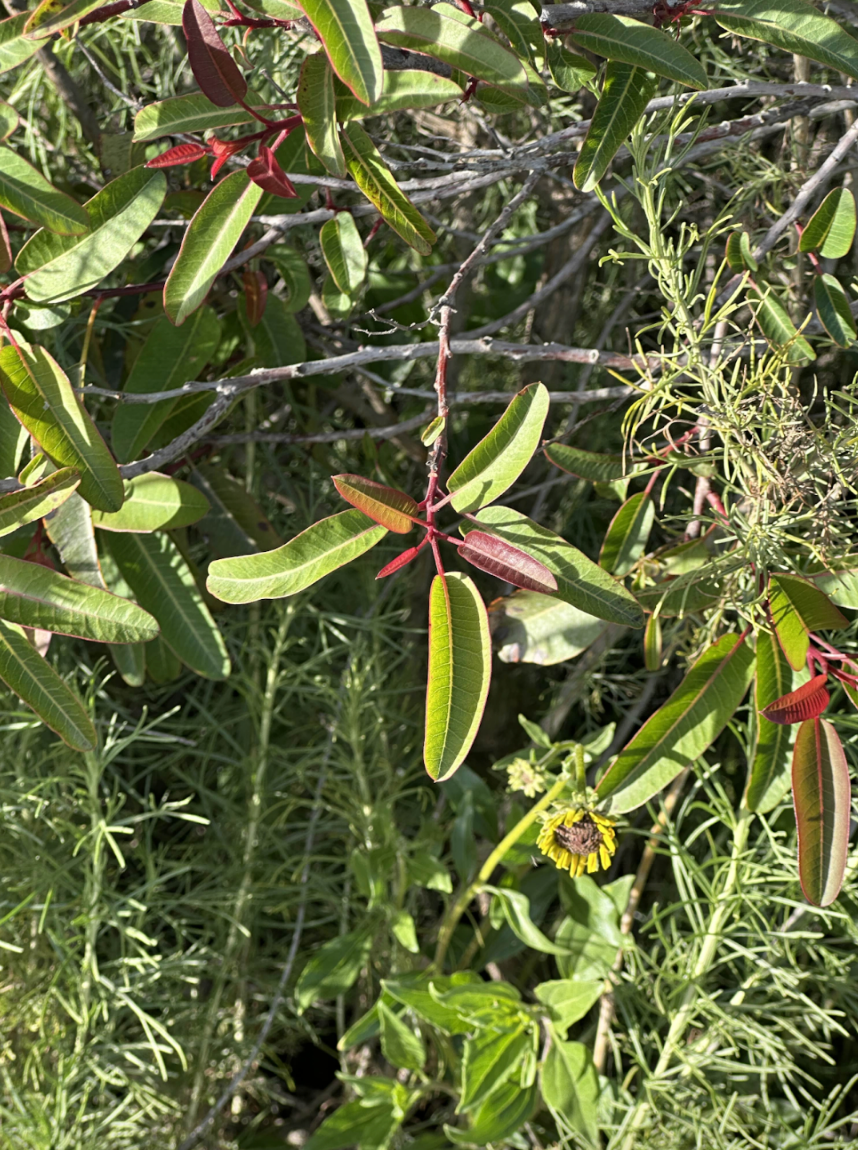
Laurel Sumac
Noticeable by its crimson leaves, the Laurel Sumac tree thrives in chaparral regions. In order to survive in its arid habitat, the tree’s leaves have adapted to become thick and leathery in order to prevent evaporation. Taco-shaped folds down the length of the Sumac’s tree funnel dew and water down into the plant’s roots. The Laurel Sumac also has a lignotuber, a woody swelling near the base of the tree, which accumulates carbohydrates, nutrients, and dormant buds. In extreme conditions, like after wildfires, where the rest of the plant has been destroyed, the plant can survive and recover by sprouting from its lignotuber and sustaining itself on the resources it has accumulated over time until the plant regenerates a sufficient portion of itself to continue growing normally.
The self-rejuvenating abilities of lignotubers can possibly be applied to objects that require high-survivability and have no access to reliable maintenance, such as space probes or rovers, scientific instruments in the Antarctic, or other objects in inaccessible areas. A self-regenerating mechanism that stores excess resources/energy to repair itself would increase the odds of survivability without any human intervention needed.
Ryan Fu
bottom of page